Positively Unproductive

How to achieve (almost) complete positive unproductive existence in a world that has slowed.

A new take on ‘How To’ guidance.

“Strange, what being forced to slow down could do to a person.”

As an incredibly busy person I usually am on the go non-stop and that’s the way I like it! I work hard and produce results from this productivity that inspires me to continue the cycle. In the 21st century this type of person seems to be rushing by us much more often than we would expect. Whether it includes working full time, studying or a full time parents or carer, most people finish the day to continue being productive well into the night. We live for the hustle.

But now the world has stopped.

A pandemic has hit the entire world and for those that like to keep moving, the world seems to have come to a complete and utter halt. Shops are closed, places of work have sent their people home and going outside is to be avoided at all costs. Despite a plethora of day dreams that leave me wishing for a six week break of doing absolutely nothing…this situation has left most busy bees feeling lost and wondering what to do next.

If this sounds like you, this How To guide is for you.

Despite social media attempting to drown me in ‘at home workouts for amazing abs!’ and ‘ways to ensure you do not waste your time inside’, I am attempting to take this time to do exactly what was intended…nothing. Alright not completely nothing, that is not completely possible and definitely very boring. BUT, very little productivity is the aim. Since the age of 14 I have worked alongside school and university, most summers are filled with minimum wages and hair nets so I am utilising this strange and almost unimaginable length of emptiness to give my mind and body a well deserved break. I aim to be unproductive in the most positive way.

Creativity

As a naturally creative person I find this aspect of isolation as the easiest to accomplish and positively pass time. However, let me clarify that creativity does not mean forcing yourself to paint landscapes and write poems on a daily basis. Creativity is found in everything! Find some varying ideas below:

  • Design a new clothing style for yourself! How can you develop your style to more suit your personality?
  • Rearrange your space- Whether this is moving the toaster to the other side of the kitchen or putting up new photos, the opportunities are endless.
  • Create stations in your home. Bare with me on this one. I am lucky enough to be isolated with my housemate and together we have created different stations in the house to visit when we feel like it. A reading corner with lights and a selection of books we are sharing, A self-care corner where we now keep our makeup and skin care products with lots of cosy blankets. You get the gist. Experiment! See what you can collect.
  • Learn a routine: As TikTok seems to take over the world, the more I have noticed people learning dance routines. This is a fantastic way to express yourself in a physical way and can provide interaction with people outside your place of isolation.

The list is endless really. The best way to address this aspect of (un)productivity is to try out all of them! See what you can come up with and I am certain you will surprise yourself at how creative you can be when you aren’t trying so hard to achieve.

Care for your space

Another great way to find value in doing nothing is to care for the space you are in. Although this situation is not by choice, we can choose to create a space that is more positive for us. Here are some examples of how:

  • Plant something! If you are lucky enough to have some outdoor space then a great way to use this is to plant something new. This idea is inspired by my Nan. Over a video call last week she told me that she had cut open a tomato, planted half in some compost in a pot and it is now sprouting into a tomato plant! What better way to add value to your space than to create life?
  • Add light: one of the most significant changes to your day include how much daylight you see. Obviously this can vary on your situation but it is so important to try and get just ten minutes of daylight a day. Wake up, open your curtains and soak up some sunshine when you can. It will make such a different to your day I promise you.
  • Take notice of nature: Despite everyone being stuck indoors, there is still so much going on outside. The trees are regrowing their leaves, flowers are blossoming and the birds are making nests ready to lay their eggs. See what you can find. Take note of the life going on outside of human nature. The world is much bigger than just us.
  • Keep your space clean: This is essential. Where this means depends on the person but whether this is your desk, your bedroom, your house or your bed, keep it clean and tidy. Waking up and making my bed every day is the best decision I make in that moment. It sets me up for a positive and clearer mind and space.

Try something new

This is my favourite task currently. Trying something new that you would NEVER have tried without this situation. Something you will most likely never really need. Something not productive. Something for FUN! Here are some fun ideas to try:

  • Learn a new language: Whether it be practising a language you learnt at GCSE level a lifetime ago, or an entire new language, you will surprise yourself with what you can learn. Duolingo is a saint.
  • A new move: As a passionate yogi (someone who does yoga) I am starting to test myself to try new insanely cool poses (crow pose and crane pose) that I would never usually have the time to build up to. I am no way near there yet…but when I manage it I will let you know.
  • Fire Poi: Alright this is a strange one. My dark horse housemates Hester has a hidden talent of Fire Poi (look it up). Despite the lack of fire involved when I try it, she is teaching me Poi in the garden and I can guarantee I never would have learnt this skill otherwise!
  • Computer skills: My partner (@karliskah) has used Photoshop basically non-stop since I have known him and it still baffles me to watch him turn a blank grid of a screen into 3D turning face with graphics. How does this work? I have no clue, but I intend to find out and give it a go.

Mindfulness

Anyone who knows me well enough will know I am a huge fan of mindfulness. By no means does this mean I meditate for hours a day and believe in the 8 fold path…BUT I do believe that regularly practising mindfulness can add to anyone’s life and promotes a more positive mental well-being. Here are some simple ways to get started:

  • Senses awareness: My favourite thing to do when I am outside! Make a mental note for yourself- 5 things you can see? 4 you can feel? 3 you can hear? 2 you can smell? 1 you can taste? Just spending these two minutes brings grounding to the moment and reminds you to live in the present a little more.
  • Journal: Whatever this means to you is right. Whether this is writing a daily diary, creating a one second a day (check the app) or quickly jotting down how you feel each day, this awareness of your mind is healthy and worth while without doing anything productive. (for more on this, check the app Cactus that I use daily).
  • Meditation and Yoga: Awareness of breath and a connection of mind to body provides more than you expect in regard to being mindful. Learn to embrace yourself. Stretch your limbs out, take up space.
  • Reflect: This is a really easy way to practise being more mindful on a daily basis. Reflect on how you feel, an interaction you have had with someone, a decision you have made. Question yourself and learn why you do you that way. Discover how to be your own biggest supporter.

The essential thing to take from this How To guide is to be kind to yourself. Despite what it seems like on social media, this is not a time to push yourself. Give yourself a well earned pause and learn to enjoy it! Any more suggestions are definitely welcome and I send love and safety in this crazy time.
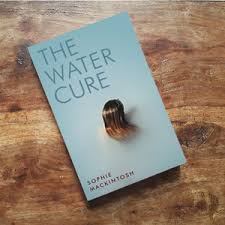
A Short Review of The Water Cure by Sophie Mackintosh.

After a couple of months reflecting over this Coming-of-age, dystopian novel, I finally have fathomed the words that can partially justify why anyone should read The Water Cure. Sophie Mackintosh’s novel was gifted to me by a close friend for my 21st birthday after a wonderful evening involving lots of cocktails and even more book recommendations. For this gift, Sam, I will forever be grateful. Mackintosh’s insightful and striking novel gives a universal insight into the feminist world of the stand-alone woman and the power of women combined. It is a must read for any woman that looks to understand the power of herself and the importance of the women surrounding her. Like water can wash us away and wash away, this book gives note to the empowering feeling of women unalike in a world often seeming to be set on independence.

Three sisters Grace, Lia and Sky live on an isolated sunshine filled island and are raised by their parents, Mother and King. The water around the island is contaminated and so is the land surrounding that, they are raised on the island by their parents who escaped to this deserted land in order to safely raise their daughters post-apocalypse. The three daughters, each with wildly different personalities are raised to believe that it is unmanageable emotions, specifically men’s emotions that caused the destruction they hide from. They are taught to supress these emotions, and train themselves to no longer feel them by means of physical punishments, the worst which is called the water cure.

Then one day their King leaves the island for resources and does not return. Then when three men arrive on the island and Mother, Grace, Lia and Sky are without protection, their world of protection seems to spiral out of reach. Inspired by Shakespeare’s King Lear, Mackintosh’s influential novel utilises the extremities of post-apocalyptic dystopia to provide a metaphor for the disadvantage of female limitation. As these women are supressed to conform to a safe and ‘good’ character idealisation, Mackintosh provides an example of the destructive nature of conforming to male idealisation and objective gaze. As each daughter alternates as the narrator, we begin to understand their suffering due to this, the physical punishments and their psychological detriment due to this.

The water that surrounds them turns from restricting to replenishing, and Mackintosh writes this beautifully. Each chapter is strikingly open and bare, tense in its movement yet naturally imploring. Unlike most feminist dystopian novels, Mackintosh does not utilise an awful world to demonstrate how ours is paralleled in her fiction, but instead provides a microscopic and detailed version in the family of the three daughters, Mother and King. As we are given an insight into the minds of each daughter, women of all personalities can relate in one way or another and understand that confinement and expectancy should only come from oneself, that women like these cannot be categorised and expected to follow a stereotype created by men. And so, as the novel continues to reveal more truths about the world in which these women are confined, it is impossible as a reader not to feel a yearning for self-liberation and independence. To avoid your own water cure, and find peace in your waters.

How to Make the Absolute Most of Your Student Experience- a Five Step Guide.

After completing my degree at university I have had time to look back and reflect on what I achieved in the three years I spent in Cardiff. I obviously learnt a lot about my degree subject, made lots of life-long friends and explored a new wonderful city. I developed massively as a person and discovered how I enjoy spending my time and what type of people I enjoy spending it with. This seems to be the case for most people that leave home to study and I think these are all wonderful additions to the degree you end up with after the three years you spend at university. However, one thing I could not help but notice was different about my experience compared to most was how much I managed to travel. Each time I went home my friends and family would be astounded that I had somehow managed to visit yet another country and explore another region of the world. They would often say, ‘how can you afford this as a student?’ or ‘I thought you were meant to be studying not going on holiday!’. One thing I managed to do whilst at university was visit seven different countries in the space of two years. This article is going to be a five-step guide on exactly how I managed it.

Step One: Time Management.

The most important aspect to achieving this is you must have good time management. I luckily am naturally incredibly organised and since doing the IB instead of A Levels I quickly learnt how to balance lots of tasks at the same time. (If you don’t know what the IB is then look it up, it’s next level). This meant that instead of waiting until I had finished a course before I prepared for exams or essays, I was rearing to go from the start. Most modules provide a layout of the questions you will be asked to answer or topics you will write on at the beginning of the course, meaning that around a month into the course you technically have enough information to get started. An example of this was my Shakespeare essay. A 1,200-word assignment that was due in January, I was required to write on one of the plays we studied. After just a few weeks we had studied 2 plays and I felt comfortable to decide which one to work on and begin writing. The main perk of University is that you can meet with your professors whenever you like and they will be more than happy to discuss in depth, anything on the course. Therefore, when I came to my lecturer with my essay plan just two weeks into the course, he was able to advise me on what books to read and what websites to search to further my knowledge on the topic. With the internet at hand it is very easy to research a topic or piece of work as well known as Shakespeare’s, so I completed the essay by October and did not have to think about any assignments for that module for the next few months. This gave me free time to work towards my next visit to another country.

Step Two: A Part-Time Job

For me personally, a part-time job whilst studying is essential. Not only does it take the pressure off your student loan, but it forces you to use your time more productively and spend your money more wisely. Throughout my degree I have always had a part-time job, whether it be as a waitress or a barista or in retail, it has allowed me to save for trips abroad, and feel like I was using my time wisely gaining experience in an industry I wouldn’t otherwise. I personally am very proud to say I know exactly how I like my coffee and know where serves the best desserts in Cardiff. Working in both the city centre and the bay has allowed me more time to explore Cardiff in general and forced me out of the sometimes-suffocating world of Cathays.

Step Three: Make the Most of Your Days Off!

This is something I cannot stress enough. I know this does not apply to everyone as many courses such as Medicine and Sciences have full-time contact hours at university. However, most students do not. This means that often people end up with perhaps a Monday off or a Friday off, and a lot of courses get time off at Easter, Reading Week and of course that extensive summer break. Use this to your advantage! This is something that you will never experience again after university and is often seriously wasted. A long weekend or five to seven days is often more than enough to explore a new country, especially in Europe. Not only this, but flights are massively reduced compared to the holidays, in times where students are often just relaxing at home or spending the weekend at the SU and then hungover in bed. Use this! Ryanair is fantastic for this and often offer return flights in Europe for as little as £30/40. I have never paid more than this for a flight! This will take the price of your holiday down by potentially £100 and is worth perhaps missing a lecture or two (sorry but true).

Step Four: Airbnb

Airbnb is honestly the best thing about the internet. I have found that particularly in Europe, you can manage to get incredibly cheap places to stay in big cities on Airbnb by wonderful people that are renting out their homes to holiday makers. I prime example of this was an apartment I found in Rome. I stayed for £15 a night in a wonderful apartment just outside the city, with a balcony and a full breakfast included every day. The hosts are often such nice people and Airbnb itself is very easy to filter to find SuperHosts and the cleanest and cheapest places to stay. I cannot recommend this enough!

Step Five: Prioritise

Finally, something that I discovered after my first year was that often the best way to afford to go away is to prioritise your time and money whilst you’re at university. Decide whether you’d rather spend £30 on VKs and Jaeger bombs in the SU on Saturday, or a flight to Budapest in a month’s time? Would you rather a day festival ticket for Good Life or a weekend in Toulouse? Obviously you do not want to miss out on the great events that happen in Cardiff alone, but it’s so easy to still enjoy these without overspending what could contribute to another trip. Societies are a prime example of this. If you are part of a society, it is likely that you end up at the SU every Wednesday dressed as a Cat or a Hotdog or something and then can’t afford to join when they decide to go on Tour to Prague. Ask around for outfits and split spirits with friends, the money that you save on the Flamingo costume you’ll never wear again, or the extra half a bottle of Vodka you probably didn’t need could be the difference between joining a wonderful group of people on a life changing trip abroad. Trust me, these trips are the best and you will end up with life-long friends. (I love u Expression girls)

So go get out there! If your exams are over by mid-June then grab a trip to Portugal whilst your younger siblings finish their GCSEs. Avoid Fam Fish every other Wednesday and keep some bread in for emergency drunk toast making. Pick up an extra shift on the Sunday when you don’t have any plans, and smile at rude customers as you know you’ll spend that measly £6.50 an hour on something worthwhile. University is about freedom and experiencing the new and exciting, so make the most of it.

A Review of Laia Abril’s On Abortion (2017) and other works at The Photographer’s Gallery (May 2019)

On a day trip to London in late May I found myself with a few hours spare to explore around Oxford Circus. Despite the sometimes overwhelming multitude of brands and shops to explore in the surrounding area, as a student with little money and a continuing thirst for knowledge after finishing my degree, I decided to explore a nearby gallery. The Photographer’s Gallery was close and included a student half-price ticket so seemed like the ideal de-tour. Aside from a little research into photography in sixth form, I have a basic understanding of photography, but am hugely enthusiastic about exploring any form of art whether it be literature, sculpture, performing art or photography. Despite feeling a little unqualified to explore ‘The Photographer’s’ gallery, I was instantly welcomed by the staff at reception with warm smiles and compliments on my dress.

The Photographer’s Gallery did not disappoint. With seven floors of light open spaces displaying award winning artwork, a café and a bookshop, I was in my element exploring from the top floor downwards. In order to ensure I understood as much as possible from each exhibition I read the information provided and explored work from around the world. This began with Arwed Messmer’s RAF- No Evidence / Kein Beweis, which provided an enigmatic alternative interpretation of photography as a provider of evidence, looking specifically at the Red Army Faction and police recording of the death of student Benno Ohnesorg, Messmer’s depicted of the lack of evidence found from photography seemed an intriguing oxymoron to begin my visit. From this point I moved into Northern Iraq with Susan Meiselas who explored the seemingly unknown history of the Kurdistan. Meiselas’ work expanded over 5 centuries of research into uncovering the anonymous deaths of 100,000 missing Kurdistan homicides. Meiselas’ work provided a touching insight into the world of the hidden survivors of a massacre across 4,000 villages and provides a voice for those that Western society has yet to fully discuss.

On the fourth floor of the gallery I moved to view Mark Ruwedel’s work in Northern American landscapes, focusing on abandoned deserts, nuclear testing sites and other areas of land marked by the hand of human kind over time. Ruwedel’s environmentally impacting settings alongside his artistic talent to capture them, provided him the Deutsche Börse Photography Foundation Prize of 2019.

By this point I had been relatively moved by the work portrayed and felt satisfied with my experience at the gallery. As I moved onto the final section of the fourth floor I was met with the sound of Donald Trump’s infamous voice claiming that women undergoing abortions should be punished for their crime. As I begun reading the introduction to the exhibition I could not help but feel my heartbeat quicken and my leaflet become damp from the sweat of my palms.

“Drawing on the history of reproductive rights, [Laia Abril] questions the social and political motivations of contemporary ‘lawmakers’ who continue to erode women’s reproductive rights, creating a comprehensive overview of the triggers, stigmas and taboos concerning the termination of pregnancies.”

Despite Laia Abril’s work being originally published in 2017, due to the recent social media uproar regarding Northern Ireland’s absurd abortion laws, this exhibition could not seem more relevant. As I continued my walk around the room filled with real women sharing their stories of illegal abortions alongside their portraits captured by Abril, I could not help but feel ashamed to not have done more to act against the ongoing inhumane rights against women aside from sharing a post on Facebook. Each woman’s story was entirely different, but they all had something in common: they were unjustly forced to put their bodies and freedom at risk due to their countries’ laws deeming the life of an unborn foetus more important than their own body as a woman. Many of the women reported of travelling to different countries alone and of being denied essential medical care due to it possibly affecting a pregnancy they did not want in the first place but were forced to carry to term. Abril’s collection is raw and clinical at points, providing a clear-cut portrayal of what women have gone through in the past and what they continue to suffer in the present.  Her multi-media exhibition includes examples of ineffective and dangerous forms of contraceptives from the 19th century, including half a squeezed lemon that often got stuck in the uterus and caused infections in women. A television set in the centre of the room provided examples of contemporary ‘lawmakers’ (all male) providing their opinion on the topic.

“Promoting abortion […] is a way of limiting the concept of the human being.” “Planned Parenthood [US abortion clinics] has been far more lethal to black lives than the KKK ever was.”

As a young woman born and raised in England, I have never questioned what it would be like to be forced to put my body at risk of death for the sake of another potential life due to the laws of my country not allowing me to have an abortion. Never have I questioned whether I would be kept alive if brain dead and pregnant, despite by family’s wishes, in order to save a life that is not yet living, as happened November 27th, 2014 in Ireland. It fills me with fear to think that women across the world and on the other side of my homeland in the UK are experiencing this every day, and due to Abril’s powerful depiction of this through photography, I was brought to tears just as these women often bring pregnancies to term, against my will.

As I left the exhibition I felt my skin prickle with anger as I watched other art lovers quickly walk through the exhibition without giving it much more than a glance. I wanted to grab them by the arm and pull them back to see what they had missed, to force them to focus on what is evident in front of their eyes and to react to it, to act upon it. But not everyone is interested in this topic. Many readers will get half a paragraph through this review, lose interest and return to their Instagram stories full of dog videos and doughnut pictures. Philosopher Peter Singer argues that people are incredibly unlikely to help children starving on the other side of the world, but almost everyone would stop to help a child drowning in a lake. This is because of his argument of relativity. If an issue is presented to you and is close to your heart, you are more likely to act. Those that run the Race for Life each year almost always have someone in mind to run for, a personal purpose. So how do we change this? With issues as large as this happening across the country, Abril is providing a perfect example of presenting issues to people through the form of photography, yet it is still being ignored by many. What can we do?

Talk.

In her new book We Are Displaced, Malala Yousafzai claims that any action is best. Whether this be devoting your life to an issue you believe in, opening your home to refugees or working full-time in a mental health clinic, or volunteering in a school for disabled children on the weekends, or simply discussing issues such as unjust abortion laws with others. Everything has an impact. In a world with so many rising issues it is impossible to conquer it all. So do what you can and provide an incentive for others. A five-minute chat about climate change with a stranger in a coffee shop could result in them googling to find their nearest zero-waste shop or remembering to bring their own bag to pick up groceries. Abril has shared photographs and stories of these women affected and it has lighted a fire in me. It has motivated me to act on these issues and share her work. I started the day wondering what I can do with my summer before I start my post-graduate course in September. Now I am inspired to look into volunteering, to look into campaigns that I can contribute to in order to work towards a change, to support women in traumatising positions and attempt to provide an outlet for women that are primarily affected by the unlawful rules of their bodies that their government have decided on. Educate yourself, expose yourself to the problems that require attention and be part of a change.

Let Them See What I Have Seen

The artistic approach to Jordan Peele’s film Get Out includes the use of photographs as metaphorical objects for the representation of black people in contemporary America. As the world continues to become more and more digitalised, with the average American spending three hours on their smartphone per day, this contemporary film suitably captures this importance and the power that photographic art can contribute to change. This change is imperative. ‘In 2009, the face-recognition technology on HP webcams had difficulty recognizing black faces, suggesting, again, that the process of calibration had favored lighter skin’. This not only demonstrates the prejudice black people face day to day but is an example of how black people are literally not seen from the white perspective. With this facial-recognition failure, Peele utilises the art object of photographs to encourage people to awaken to the racism that surrounds them, and the difference black people witness.

The film’s soundtrack begins with Redbone by Childish Gambino, the lyrics ask the audience to ‘stay woke’, a term often associated with the Black Lives Matter movement which automatically indicates to the audience the overall theme of the film and the ideologies of the main character, Chris. We are given an inside look at Chris’ apartment that is covered in his own photographs, mainly of African American children in the city. ‘These photographs are one of many reminders of Jordan Peele’s artistry in establishing the contrast between black and white as well as emphasizing the importance of perspective’. This alternate perspective is resembled through the objects of the photographs that have been taken in urban area rather than the upper-class white household with architecture of the southern tradition that follows from this location. This contrasting perspective of reality is further established in this scene when Chris and his partner Rose discuss his concerns about meeting her parents without them being aware that he is black. Rose’s response is that her dad would have vote for Obama for a third term if he could have. This contrast between the common reality in which black people often experience racial prejudice and are negatively represented, compared to Rose’s nonchalant yet racially categorising response further validates Peele’s intentions. This contrast of character focuses on the concept that ‘white and black Americans view the same situations through very different lenses [and this] is something [Chris] already understands’ as can be seen through his awareness of potential future experiences of prejudice and racism in environments where black people are misrepresented or not represented at all.

Once Chris reaches the family garden party, this difference is vast compared to his surrounding company of white people. Due to this, ‘despite King’s (or Hayworth’s) odd appearance, it is Chris who sought him out, admitting to King that he felt much more comfortable after spotting him among the guests’. When Chris realises that he recognises King, it is the art object of the photograph he takes that seems to wake Hayworth from his subconscious trance. The photograph is used to demonstrate the contrast between the black and white perspective, between the harsh reality of racist contemporary America of which we need to ‘stay woke’, and the unrepentant silencing of black people throughout history that is symbolised through ‘the sunken place’. ‘It is only when Chris snaps a photo of Logan that the African American man, whose body Logan’s white consciousness was transplanted into, wakes up’. This is powerfully captured later again through Peele’s use of the silent auction scene which misuses the object of Chris’ photograph to subjectify his body as a black man to the white family’s desires. As the auction deliberately connotes slavery without a word of script, Peele clearly captures how the perspective of black people is of silent repression, whereas the perspective of white people is oblivious and often accepting of this being a possibility.

This acceptance yet partial obliviousness to racism is further seen when Chris interacts with the gallery owner Jim Hudson. Despite his physical blindness, Hudson has artistic appreciation for Chris’ photographs which emphasises the importance of Chris’ art being well known. Hudson claims that ‘“[t]he images [Chris] capture[s], [are] so brutal, so melancholic”. What the gallery owner is suggesting here is that Chris’s photographs lay bare the brutality of the world around him’. Not only does Hudson’s recognition of Chris’ tonally despondent photographs prove his decision to admire their beauty rather than their sorrow, but additionally reiterates the concept of white people having an alternative perspective than that of black people. Throughout the film Chris continuously utilises photography to gain a sense of reality in the dystopian environment in which he has found himself. He takes photographs of the psychologically enslaved which wakes them from the trance of ‘the sunken place’.

The sunken place is Peele’s metaphorical juxtaposition of staying ‘woke’, the sunken place represents the subconscious silencing of black people in contemporary America. Despite how far racism seems to have come, people are still blind to the prejudice black people face in the twenty-first century. No one has represented this silencing more powerfully through photographs than Emmett Till’s mother.

For what turned out to be an untruthful claim that fourteen year old Emmett Till had sexually harassed a white woman, his body was graphically mutilated by two white men and he died over half a century before the average age of death at the time in the US. After his body was returned to his mother, ‘authorities in Mississippi tried to bury the teenager as quickly as possible, his mother, Mamie Till Mobley, insisted otherwise, allowing photographers to commemorate the ghastly scene’. Emmett’s body was publicly accessible at the funeral and photographers were encouraged to publicise his grotesquely mutilated body. Mamie Till Mobley refused to stay silent of the mistreatment of black people, including her son. ‘“[People] would not be able to visualize what had happened, unless they were allowed to see the results of what had happened,” she later said. “They had to see what I had seen. The whole nation had to bear witness to this”’. Peele powerfully demonstrates this prejudice and unjust epidemic through the art object of photography inside his artistic film. The horror genre of ‘the sunken place’ not only sheds light on the psychological impact of this for black people in society but becomes an outcry for much needed attention to a blind audience of white people.

‘I am a marked woman but not everybody knows my name’

Despite living in the twenty-first century, the combination of commonly occurring racism and sexism still leaves black women held at prejudice in contemporary America. Throughout history black women across America are unheard, undefined or objectified and defined by others art. Robin Coste Lewis’ book Voyage of the Sable Venus homes in on this entirely, by representing the lost, broken and unwillingly defined black women of art objects throughout America. Lewis’ ‘narrative poem[s are] comprised solely and entirely of the titles, catalog, or exhibit descriptions of Western art objects in which a black female figure is present, dating from 38,000 BCE to the present’. Her book sheds light on this topic whilst providing an alternative platform that allows black women to define themselves. ‘One could write the word “Untitled” repeatedly on a piece of paper every day for the next hundred years without stopping, and you’d never reach the end of female namelessness’. Lewis’ work attempts to undercut the tragic denigration of African American women, that uses history to define black girls before they are even born.

One of history’s most common stereotypes of black women is that of the ‘Sapphire’ caricature—the typically depicted shrew of society: the angry black woman. First created in the 1930s comedy show Amos ‘n’ Andy, Sapphire is an example of the racist preconceptions of black women that continue in contemporary society. The backlash that American professional tennis player Serena Williams faced over her controversial US Open loss gives evidence of the ongoing objectification of black women in artistic objects such as magazines. It was not her loss of game that caused controversy, but her reaction to the referee’s calls ‘which the Women’s Tennis Association has since decried as “sexist”’. The backlash from her angered reaction in the game resulted in a Sapphire-like cartoon of Williams being publicly published. The object of this cartoon depicted Williams in an ape like pose and a tantrum like rage, ‘[t]his contrasted with the depiction of Osaka, whose father is Haitian and mother Japanese, “as white with blonde hair”’.

Whether Williams’ behaviour was inappropriate for the court or not, the racist denigration and debase that she received through this art’s objectification was unjust and continues the negative stereotypes of black women. The cartoon’s comparison of the two women of different skin colour indicates a racial bias against Williams, which ultimately contributes to the misinformed opinion of the general public in believing that black women are too emotionally unruly to play amicably, be mothers, and to teach. Bell Hooks explains that women like Williams, as ‘radical black female subjects are constantly labelled crazy’. This indicates that despite her public platform, due to the prejudice against her, Williams is unable to be heard.

These unwanted titles that connote times of slavery, the Mammies, Jezebels and Sapphires of stereotypes, or simply the lack of identity of being an ‘untitled’ black woman is prominently discussed in Lewis’ Voyage of the Sable Venus. Lewis’ use of language techniques such as enjambement and double entendre give further value to the titles that the art objects she references have been given, emphasising their racist and degrading nature.

‘Statuette of a Woman Reduced

to the Shape of a Flat Paddle’.

This beginning couplet of Lewis’ poem Catalog 1: Ancient Greece & Ancient Rome mentions of an object seen to be defined as a black woman yet is given no detail of name nor features. Lewis’ use of enjambement brings focus to the word ‘reduced’, highlighting the effect of this on the black woman that has become the object. She is reduced to simply the shape of her body. Like a shadow, her background and colour are simply blackness and nothing more. She is untitled.

Later, in Catalogue 1, Lewis writes of a:

‘…Lion Devouring a Black Head

of a Black Nude Black Serving Girl’.

These black women are consistently fragmented, pulled apart and put onto display, they are never left to preserve themselves as whole. The repetition of the capitalised word ‘Black’ only puts further focus on how these object women are perceived simply for their stereotypical representation as a ‘black […] girl’. As Lewis’ poetic art object re-appropriates the titles of museum objects, it sheds light on this objectification that is being presented through art to susceptible young black women in contemporary America. Lewis’ ekphrastic art renews this categorical analysis of women into a journey of recovery and agency, she allows black women of America to embark on a voyage away from misogynistic and racist subjectivity and towards their own personal identity, as mothers, as doctors and as teachers of the future.

Lewis’ book ultimately uses these objects of prejudice and confinement to present a more hopeful future for black women in contemporary America. Her book provides freedom and repair for the women of artistic objectification, it allows them to sail away on a ‘ship [that] [is] an ark—and all of them [are] singing and cackling’. However, she also emphasises that unless society alters the way we allow black women to define themselves, they will never be able to thrive as individuals. If black women are consistently told that they are not fit to be teachers or mothers, then how can we expect black women to strive? Olivette Otele is the UK’s first and only black female history professor. For Otele, this is not something to be proud of. She claims ‘[she doesn’t] want to be the UK’s only black female history professor’, as black women are so misrepresented and excluded from history, it is essential that women like Otele are given the opportunities to continue to influence future generations, so that the young black girls of the next century are something other than ‘Untitled’.

Men are from Mars, Women are from Venus, so are Black People from Pluto?

African Americans throughout history have often been misrepresented in art objects such as photographs, sculptures and paintings. This is something contemporary African American artists and writers have explored, exposed and reappropriated through their art to produce relevant and powerful work that speaks of the ongoing race issues in America. Their works hold power; they are, as examined in this series of articles, as Bell Hooks depicts; ‘a rebellious desire, an oppositional gaze’ for people that refuse to be silent, people who know that racism is still alive and well. For example, negative representation of slaves in the daguerreotypes that Carrie Mae Weems uses in From Here I Saw What Happened And I Cried, are a prime example of the type of historical racism in art that has misrepresented black people for generations. As Weems utilises these racist art objects to transform artistic representation, Michelle Wallace’s viewpoint remains prevalent through the re-appropriation Weems undertakes: ‘The history of the period has been written and will continue to be written without us. The imperative is clear: Either [black people] will make history or remain the victims of it’.

Weems reappropriated Louis Agassiz’s slave daguerreotypes to echo that this emancipation is yet to arrive. As the owner of the daguerreotypes, Agassiz has since been seen to have forced the slaves to be photographed almost nude to assist the scientific research into polygenesis of black people and white people. Despite claiming ‘that his beliefs on racial typologies were without political motive’, when writing of his first encounter with a black man, Agassiz stated:

it [was] impossible for [him] to repress the feeling that they are not of the same blood as us. In seeing their black faces with their thick lips and grimacing teeth, the wool on their head, their bent knees, their elongated hands, their large curved nails, and especially the livid color of their palms, [he] could not take [his] eyes off their face in order to tell them to stay far away.

Weems uses Agassiz’s photographs, which in turn sheds light on the awful circumstances in which they were originally created. However, her use of altering the colour of the photographs, and partially covering them with text avoids any possibility of parallel association between the two works. Rather than accepting Agassiz’s warped theories and emotionally graphic photographs as truth, Weems has reworked them and questioned them in the process, which ultimately disempowers the photographs.

Although the work of Agassiz is disempowered, the stereotypes that the slaves in the photographs were presumed to portray are emphasised through the text that Weems adds to each photograph.

‘YOU BECAME MAMMIE, MAMA, MOTHER & THEN, YES. CONFIDANT-HA’.

Weems gives further context to the narrative of her collection, utilising the misrepresentation of the slaves as they would have been stereotyped to work both with and against the subject of Agassiz’s gaze. As the slave woman stands firm and looks directly into the camera, she seems to gaze back defiantly to subvert her stereotype of ‘Mammie’. Rather than elaborating on these racist perceptions, Weems focuses on the people themselves, giving them each a new individual representation that contrasts the text of the image.

Weems’ art works as a reminder of how art’s historical representation of race is still a contemporary issue for African Americans. Agassiz’s photographs were put on display by Harvard University at the ‘Amon Carter Museum in 1992’. Fifteen slave workers were displayed around the room, still under scrutinising gaze. ‘In what seems to be a deliberate refusal to engage with the camera or its operator, they stare into the lens, their faces like masks, eyes glazed, jaws clenched’. The cycle of misrepresentation continues, and just as ‘Georgetown University decided to give an advantage in admissions to descendants of enslaved people who were sold to fund the school’, claiming that society are aware of the past and accept that is happened is not enough to break this repetitive cycle. African American people are aware that slavery happened and that their ancestors were exploited. To publicise the work of Agassiz does not mend anything for those most affected by the photographs. By altering the photographs, Weems breathes new life into the enslaved subjects of the work. Her work ‘make[s] visible the structures behind the creation of stereotypes, in order to disrupt their continued repetition and effectiveness’. Weems’ art is not a form of closure but is a visual demonstration of finding a new sense of power in contemporary art and utilising it to emphasise the parallels between past and present racism in America.

However, Weems has not ignored or focused on the past in her work. She only selected, enlarged, and recontextualized [the photographs]. […She] viewed their lives empathetically from a black point of view. She saw these men and women not as representatives of some typology but as living, breathing ancestors. She made them portraits.

These images are brought into the twenty-first century by Weems. We are reminded that they were individuals rather than experiments, a person rather than ‘a scientific type’, and these people are still present today. Through both their ancestors and the representation of African Americans through reappropriated artistic objects such as Weems’, the positive representation of black people of history lives, despite the racist ‘domination that would contain it, open[ing] up the possibility of agency’ for the future generations to come.

An artistic review of Da Vinci in National Museum Wales

The work of Leonardo Da Vinci, art or science? Five hundred years since the death of such a renowned polymath, it can sometimes be difficult to remind ourselves of what this man represented in regard to his work. With some of his eternally famous work including his influence on a flying machine and perfectly proportioned figures with technical notes beside them, it can be difficult to remember Da Vinci for his personality in addition to what we see on the page.

As one of twelve children to his father, Da Vinci has little childhood historical evidence aside from the basic facts and figures. He had little relationship with his siblings due to their age gap, including his youngest sibling’s birth occurring when we was forty years old. In amongst all of this, it seems clear that it would have been difficult for Leonardo to gain some limelight. As a young man in a small town called Vinci in the Republic of Florence, he did not seem the obvious choice for his later international legacy and fame. However, Giorgio Vasari- 16th century biographer of Renaissance artists recognised Leonardo’s talent. Vasari describes Leonardo ‘as a very young man: A local peasant made himself a round shield and requested that Ser Piero have it painted for him. Leonardo responded with a painting of a monster spitting fire that was so terrifying that Ser Piero sold it to a Florentine art dealer, who sold it to the Duke of Milan. Meanwhile, having made a profit, Ser Piero bought a shield decorated with a heart pierced by an arrow, which he gave to the peasant.’

However, Leonardo has always been one to drive curiosity in others. As a incredibly secretive man, we simply know he was a vegetarian, and since the 13th century there have been continuous speculation in regard to his sexuality. Due to his close and loving relationship with two his male pupils, Salai and Melzi. In the past two centuries it has been decided by deduction that Leonardo was likely to be homosexual, which is believed by some to have effected his paintings John the Baptist and Bacchus. With such an in depth analysis and discussion of Da Vinci’s personal life in the 5 centuries since his death, including from Sigmund Freud, there is obvious emphasises that he is simply an everlasting moment as an person, let alone an artist.

The current exhibition in The Cardiff National Museum celebrates exactly that diversity of character. The work displayed seems to specifically focus not on the astounding scientific accuracy behind Da Vinci’s art but instead the personality of the artist himself.

Although a relatively small exhibition, this temporary experiences uses Da Vinci’s work to captures alternate parts of himself and his interests, including descriptions to give a further insight into the process behind each piece. Besides scientifically perfect drawings of the artilleries in the female body, the museum display other drawings, including what Da Vinci preferred to call ‘the ugly body’, a profile caricature like sketch of a man Da Vinci claimed to be unattractive, showing his humorous perspective on the human figure he understood so well.

This exhibition is not something solely based in Cardiff. As a national celebration of Da Vinci’s artistic influence, twelve galleries across the UK are temporarily displaying these works of Da Vinci to specifically embody his passion for what he drew, such as anatomy, geology and botany. The 144 pieces currently on display throughout the galleries will eventually come together for two major displays in The Queen’s Galleries in Buckingham Palace and the Palace of Holyroodhouse in Edinburgh. As a man who with sculptures and buildings now demolished, and anatomical work never published, the paintings and drawings of Da Vinci remain an integral and essential selection of his work that continue on as a legacy of an outstanding man. The opportunity to visit his work so locally to Cardiff University is something that cannot go unmissed. This is an experience that generations to come will not reach, and therefore deserves each student to take a moment out of their weekly schedule and visit.

The last time any Leonardo Da Vinci work was displayed in the National Museum of Wales was in 2007. Before roughly 90% of current UG university students had even started secondary school. Before America experienced a black president, and before the first iphone. So much change occurs in spaces in time like this including our opportunities. Wales Online describes the current display on our doorstep as ‘an unparalleled insight into Leonardo’s investigations and the workings of his mind.’ I urge you, take a moment in between lectures, avoid that 3 for £5 jagerbomb deal, and educate yourself in a way your education can’t!

A drawing of the plant Job’s Tears reminds the viewer of Da Vinci’s passion for plants in their natural beauty rather than just through scientific means. The relaxed nature of the simple plant on the piece of paper before us, emphasises that despite his almost seemingly omniscient experience and powerful legacy as a scientist, this piece remains a visual reminder that he believed that ‘simplicity is the ultimate sophistication’.

The Cardiff exhibition itself is not on its own in using this significant moment in time to comment on the life of Da Vinci. Galleries around the UK are all temporarily displaying these delicate pieces that have managed to remain intact for the past five centuries. Therefore, if you decide to go see this exhibition, remember to keep your ticket as this will grant you 50% entrance fee for the Da Vinci exhibition in Bristol.

Overall, even for those that have little knowledge of Da Vinci’s influence throughout history, this exhibition marks the importance of his work over time and reminds us of Leonardo Da Vinci himself. Of the ever adored man, that was such that the King of France carried him away like a trophy, and was claimed to have supported him in his old age and held him in his arms as he died. Just like this movement, artists nationally have decided to hold up Da Vinci like a trophy, in the legacy of his artwork. They still comprehend the often forgotten talent of people of the past. So through this exhibition we are asked to remember him. Not as a famous prodigy, or a polymath, or even as an artist. Simply as the man he was.

How to live sustainably in Cardiff (for the planet and your pocket!)

One of the main issues I have encountered when working on shopping more sustainably as a student, is the problem of cost. Most well known possibilities that avoid plastic and are more ethically sourced come with a price tag that most students can’t afford to maintain. Buying your peanut butter from tesco for £5 a jar rather than 52p in order to avoid palm oil often is a difficult choice when you’re living off of student loan and a part-time job. However despite how difficult it may seem to maintain a more sustainable lifestyle, in a city as wonderful as Cardiff it is much easier than you think! Cardiff is a growing city that holds contemporary opportunities whilst also remaining relatively eco-friendly and humble. This combination is a fantastic chance for students to decrease their carbon footprint without increasing their monthly expenses!

1. Your weekly food shop

The best place to start is with the obvious, groceries. With Lidl in the heart of cathays and the monster Tesco by Talybont, it’s difficult to motivate yourself to try anything other than their plastic wrapped bananas and individually wrapped snack bars. However, the absolute easiest way to shop more locally and use less plastic is to head to Cardiff Market! The market is without a doubt the most underrated place in the city. With locally sourced fruit and veg available all throughout the year, it is such a simple and easy way to grab all the vitamins you could need without using any plastic or preservatives. I have often found the market’s fruits and vegetables last longer, are much fresher and taste better than anything wrapped in plastic. They have everything you could need, and even if you forget your reusable bag don’t worry, theirs are biodegradable! The bakery stall provides what can only be described as the best bread…since sliced bread. A large fresh crusty bloomer will cost you less than £1 and last you much longer than a loaf from Lidl’s bakery isle.

Due to the market being run by small businesses and their little use of packaging, the prices are surprisingly cheap. A week’s worth of groceries including a variation of fruits, vegetables, carbs and all your herbs and spices will come to under £10 if you plan your meals in advance. The market is a totally realistic place for a student budget, and is a fantastic way to support your local area, and overall live much more ethically when it comes to your weekly food shop.

2. Snacks and Meals out

The market is also a fantastic place to go for a snack or meal on the go. With a crazy cheap breakfast bar and an italian pizzeria upstairs, you can easily sit down for a hearty lunch with zero guilt about where your food is coming from and who is gaining the profits. The locally sourced produce means these aren’t corporate business paying their staff minimum wage. These are local business being supported by your sustainable choices. However, it is impossible to mention local small businesses in the market without mentioning the wonderful and increasingly popular Clancy’s stall. In the centre of the market, Clancy’s provides vegan pies, sausage rolls (sorry greggs), wraps and all the herbs, teas and spices imaginable. With less than a handful of staff they get to know their customers very quickly and are always happy to chat. Their food can be heated or taken cold and is perfect for a snack on the go or something to keep you going in the library later. Consistently delicious and with zero waste or meat, there is no better option.

3. Coffee

Another wonderful way to save some pennies is to invest in a reusable coffee cup. Many cafes around Cardiff very much encourage the concept of bringing your own cup or mug for them to use, and will often give a discount to those that do. This includes places in town, cathays and even the ASSL cafe on the bottom floor (the barista there is very keen on sustainable living so be sure to have a chat with him!) Not only will you save money on coffee, but you’ll reduce the use of non-reusable coffee cups too.

4. Clothing

In my experience, one of the most unethical traps that people fall into is the temptation to online shop. With places such as Asos and PrettyLittleThing offering free deliveries and simple refunds, it is very easy to fall into the habit of buying new clothes online. Browsing through stores is slowly becoming less popular and as this continues, more and more packaging is being used unnecessarily to send a strappy halter neck crop top to Woodville road, wrapped in four layers of plastic. The easiest way to update a wardrobe is to take up a creative hobby and get recycling. Plain old jumpers and t-shirts you don’t wear anymore can be easily transformed with a needle and thread. Embroidery is hugely popular at the moment and is such a brilliant way to use some cheap thread and a needle from your mums quality street tin to transform your old jumper into something completely unique and hand-designed. Skills like this can be learnt from youtube tutorials and are simple once you get the hang of it. It is so much cheaper and more sustainable to buy some thread and get creative than to order yet another t-shirt online just because it’s got free delivery. Make something unique and be proud of your resourceful thinking!

5. The (non-essential) essentials

Finally, there is no better way to save money and the planet than to head on over to the recently opened ‘ripple’ store on Albany Road. As a huge supporter and regular customer at ripple I cannot recommend this enough. A completely zero waste store, ripple encourages customers to bring their own non-plastic reusable containers and fill up on whatever you need. From rice to shampoo and a nut butter machine, this place has everything you would usually struggle to find without plastic. It is so ridiculously cheap that you’ll do a double glance at the check out. They also stock fantastic gift ideas and treats for yourself, including handmade earrings, gorgeous recycled backpacks and more. For ladies, the essentials such as reusable sanitary towels and menstrual cups (seriously research them they’re so amazing) are also available, providing you a long term solution to that additional £10 a month you spend on taxed tampons that end up in the ocean.

Overall, Cardiff is a fantastic place to get into a habit of doing your part for the environment. With streets of charity stores, locally sourced food sprouting up in every corner, and places like ripple becoming more popular, it is definitely possible to live sustainably on any budget. Take advantage of the resources we have living in a capital city, use a NextBike to cycle to the bay rather than take the train, buy a plant to decorate your room rather than plastic bunting, or pop over to the market for a fresh warm welsh cake when you’re getting hangry rather than going to Starbucks. I guarantee you’ll find you have more food in the fridge, more money in your pocket and of course that little voice inside your head saying ‘you did it, well done!’

Best Poolside Read: I Am Malala

This summer the first book I attempt to devour before returning to the expectations of my September reading list is I am Malala. Published in 2013 when the author was only 16 years old, an autobiography of the girls’ education advocate and youngest ever Nobel Prize laureate; Malala Yousafzai. In 265 pages Malala answers the question ‘Who is Malala?’ as asked on a secret school bus in Swat by a Taliban assassin, that ultimately lead to Malala being shot in the head for speaking out for something often taken for granted.

As I earnestly turn page by page on a gorgeous beach in Portugal, relaxing after the stress of second year university expectations, I cannot help but feel empowered and incredibly grateful for the circumstances that have allowed me the education I shamefully attempt to escape from in a week abroad. A girl the same age as myself, Malala reveals her desperate efforts of hiding books under her shawl and passing by the severed heads of police officers on her way to school, and eventually having a bullet to the head, for something I have always struggled to wake up for.

A girl of passion and indignant determination to have what she deserves, Malala represents the powerful voice of all disadvantaged girls. No matter what, she continued her education and continued to fight for girls’ right to education across the world. Malala continues her work throughout the world and has recently spent her twenty first birthday promoting her fantastic non-profit organization ‘Malala Fund’ in Brazil.

This book is personally empowering, promotes awareness of an often tragically dismissed issue and is impossible to put down until finished. I highly recommend it to anyone that wants an eye-opening realisation of life beyond your back garden.

Design a site like this with WordPress.com
Get started